

While the waning years of Spanish rule in Western Sahara have largely faded from memory in the Anglophone world, they are vividly known across the Sinosphere. This is thanks to Sanmao, a Taiwanese writer whose autobiographical accounts and newspaper dispatches about her life in the Sahara and romance with her Spanish husband, José María Quero, became a literary sensation. Sanmao continues to shape how millions of Chinese readers imagine Africa today.
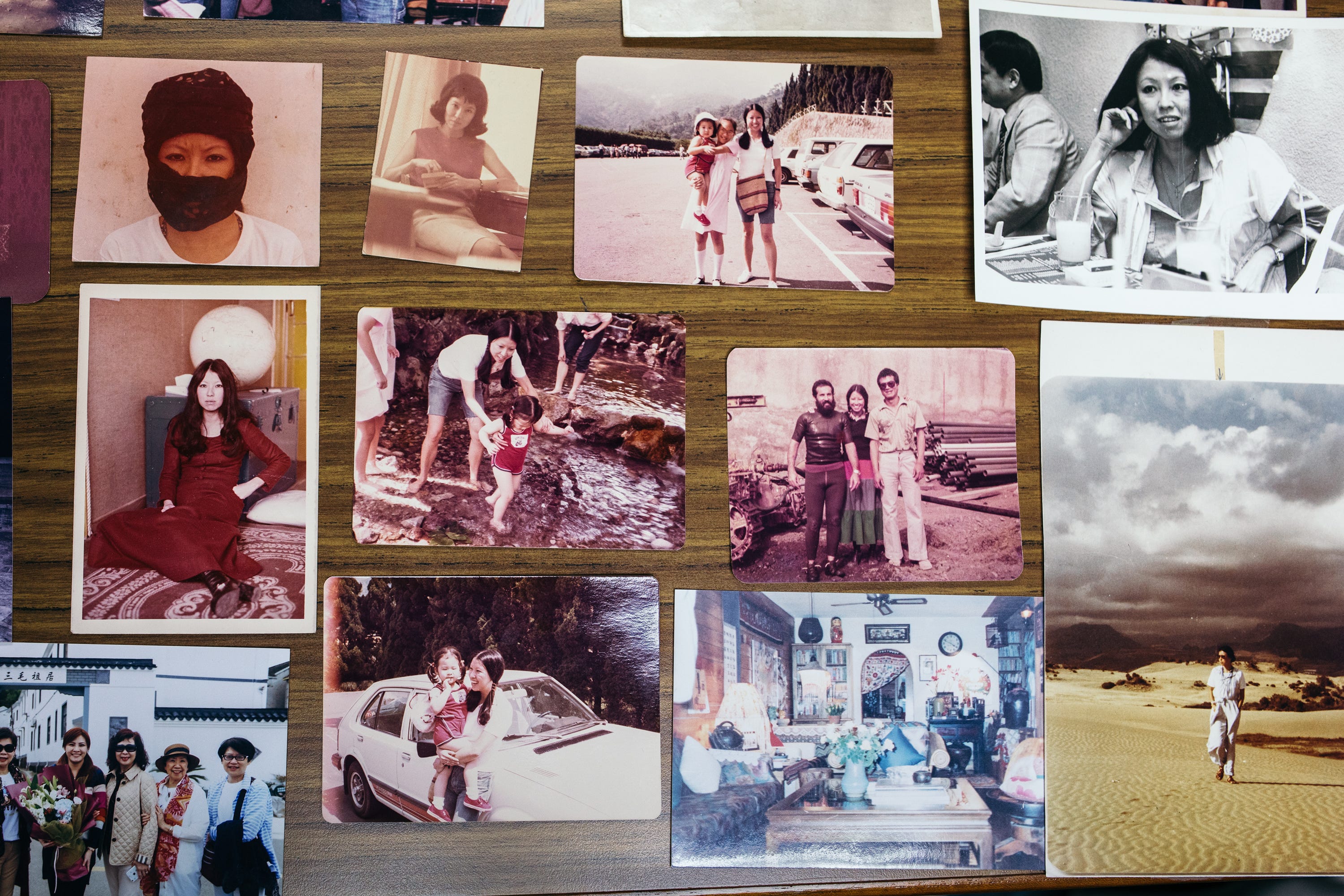
Compiled in the 1976 bestselling book Stories of the Sahara, Sanmao’s writings introduced Chinese and Taiwanese readers to the African continent and have inspired countless tourists to flock to places associated with her adventures. But did Sanmao’s Africa truly exist? For the past six years, foreign correspondent Jacob Kushner has been diving into the author’s life to discover how much of her Africa was real, and how much was imagined.
Kushner published his investigation, Storyteller of the Sahara, in the second issue of Now Voyager. He sat down with the magazine to discuss Sanmao’s remarkable influence, the ethical limits of literary invention, and why the mythology surrounding her may now be more powerful than her writings alone.
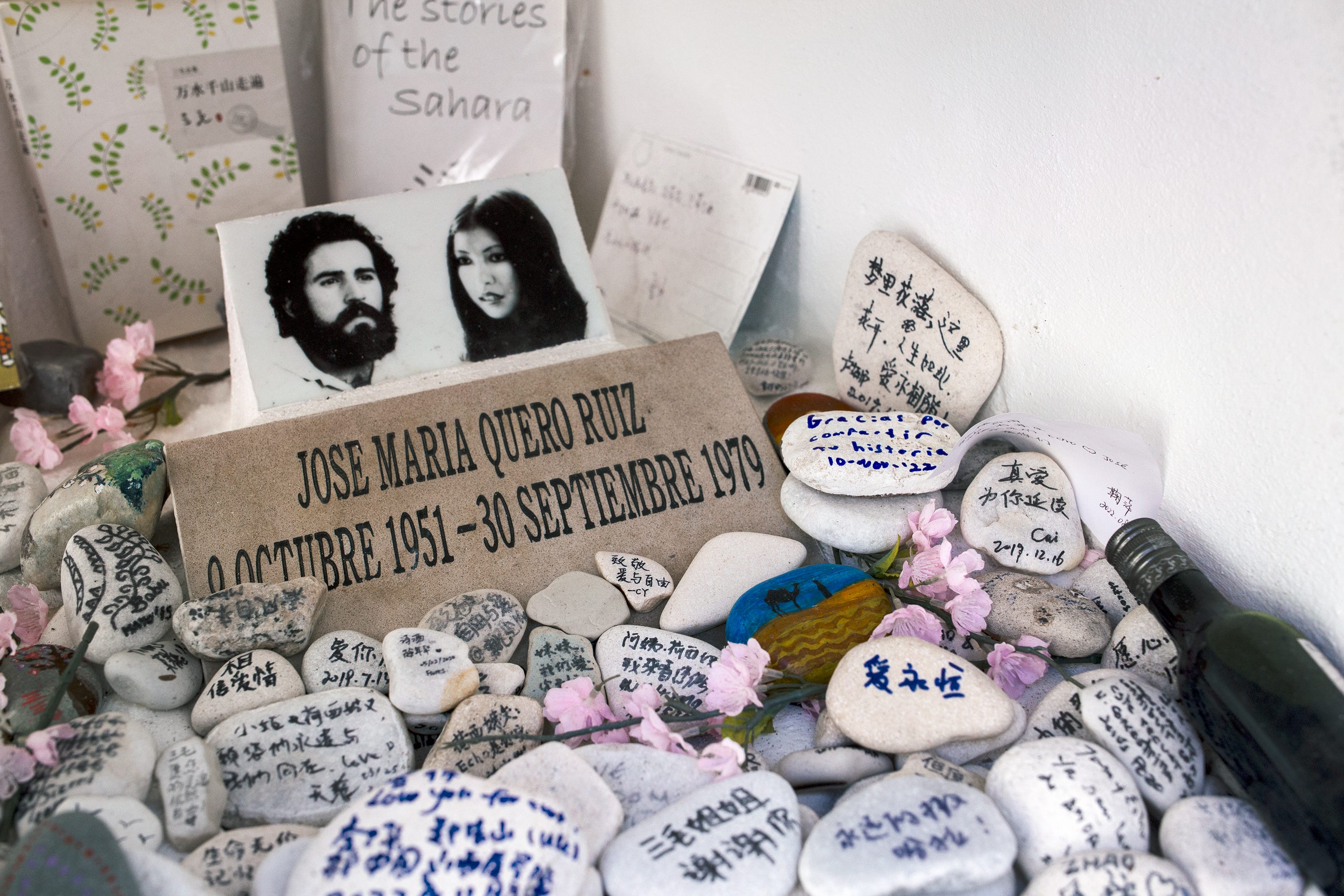
When you first encountered Sanmao, how did you imagine her? Did you already sense the colonial fantasy within her work, or did that emerge as you began speaking with readers and visiting the places she described?
I initially saw Sanmao as an inspirational writer who had introduced millions of people to another continent while offering them a vision of freedom, adventure, and romantic possibility.
Back then, I was hearing from readers who had been deeply inspired by Sanmao, and the first thing many said was that she was beautiful. The images of Sanmao circulating online reinforce that sense of romance.
Sanmao and José were seen as romantic trailblazers. In 1974, the couple committed something unimaginable at the time: They essentially eloped, marrying in the Sahara, and moving far away from their families and friends. Sanmao wrote about true love, which many Chinese readers told me was not what motivated most marriages in China. To the extent that she has been discussed in the West, she has been somewhat fetishized—and perhaps by some of her Chinese readers as well.
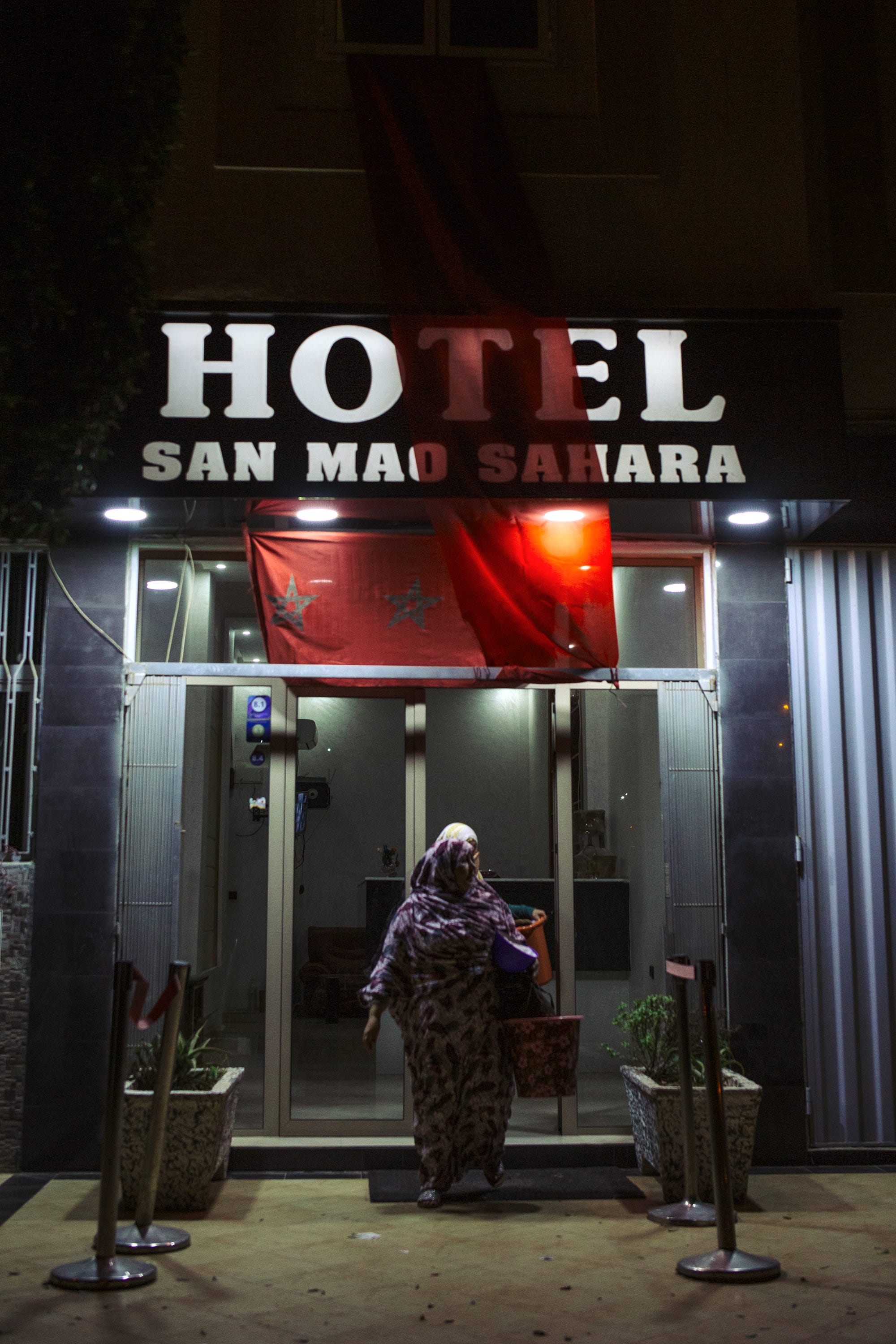
Throughout Storyteller of the Sahara, you are highly attuned to the colonial assumptions that can shape travel writing. How did you try to recognize and resist those assumptions in your own reporting?
Having lived in Nairobi, Kenya, for nearly a decade, I’ve become acutely aware of the stereotypes through which Africa is often viewed. One time, I returned from reporting in East Asia and went to a concert near my Nairobi home. Among the stylishly dressed young people listening to live music, a South African man remarked, “You can almost feel like you’re not in Africa anymore”—as though music, style, or modernity could not belong to the continent. That moment encapsulates the persistence of these preconceptions.
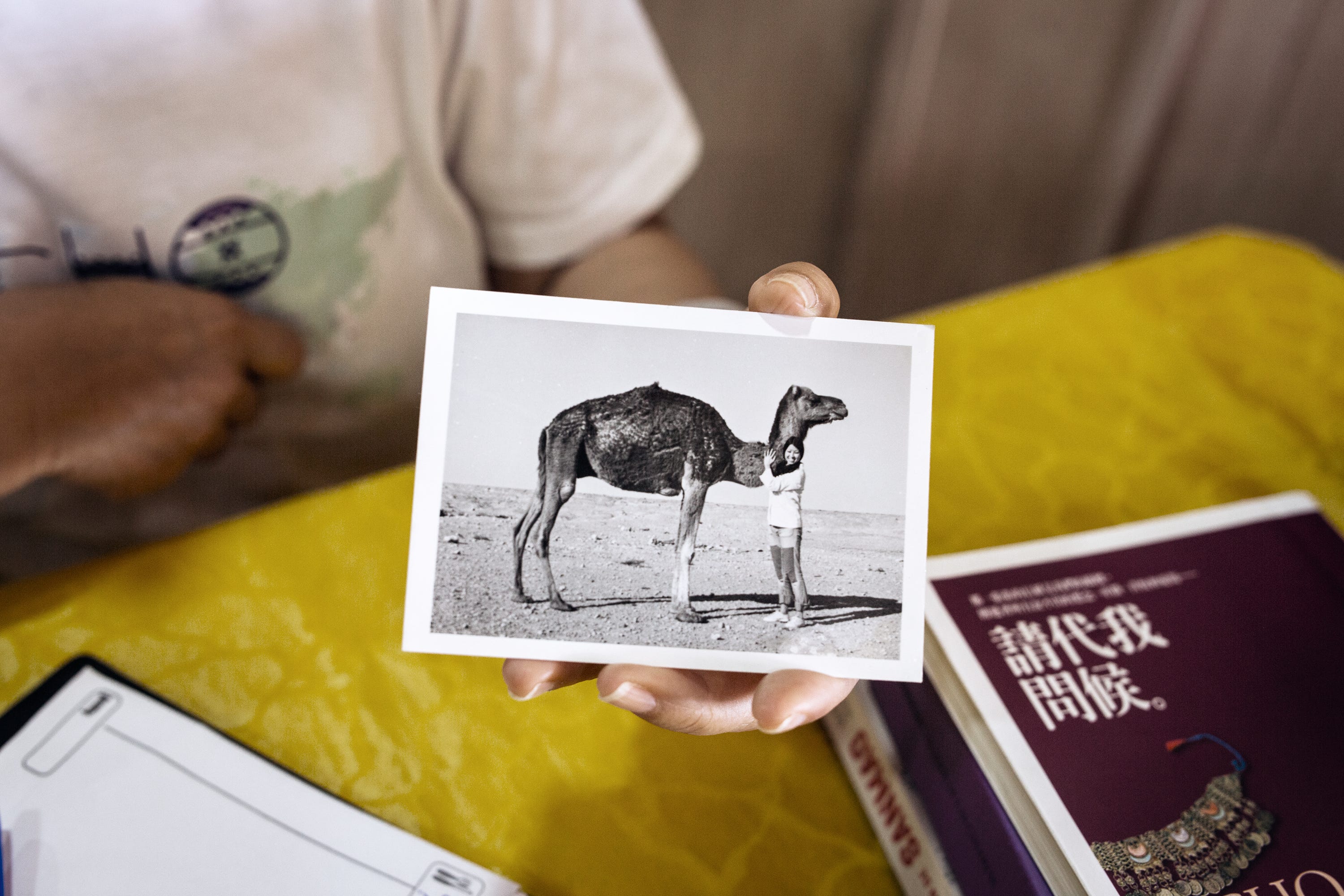
One of the first things I did for my piece was to seek out Sahrawi historians and readers, send them passages from Sanmao’s book, and ask for their reactions. That changed the direction of my investigation entirely. When I contacted Melainin Lakhal, a Sahrawi journalist and member of the Polisario Front, he immediately rejected Sanmao’s depiction of the region: This was not the Sahara, or the Laayoune, that he knew.
In some respects, Sanmao portrayed Africa with a finer brush than many foreign writers did. But she also appears to have adopted the conventions of Western writing about the “Other.” In one passage, for example, she describes Sahrawis reacting with astonishment to a mirror in her makeup case, as though they had never seen one before. A Sahrawi historian later told me this was absurd: Mirrors had been part of the culture for centuries.
Lakhal pointed out that Western writers had once made similar claims about Chinese people. His interpretation was that Sanmao may have absorbed stereotypes previously directed at the Chinese and projected them onto Africans. We can’t know for certain whether that is what happened, but it was a compelling reading. My strategy was therefore to speak to people who knew the history and the place far better than I did, and allow for their knowledge to challenge both Sanmao’s assumptions and my own.
Your piece is also concerned with the extraordinary power a writer can exercise over their audience. What surprised you most about the role Sanmao’s books have played—and continue to play—in the lives of Chinese readers?
Sanmao’s impact is difficult to overstate. Every Chinese person I encountered while reporting the story knew who Sanmao was, and dozens of women adopted “Echo,” her English name, as their own, to honor Sanmao who did the same. Some were so influenced by her that they decided to leave China and build entirely new lives abroad.
Still, it is hard to gauge how much of that influence comes from the image of Sanmao circulating online or from her writing alone. In the Sahara, I met a Chinese man named Habibi Kim, who had worked for a Chinese telecommunications company in Casablanca before moving to the desert to live as Sanmao had. He drank tea in the dunes, wore Sahrawi robes, and perhaps spent years trying to inhabit her world. When I asked what he thought of Stories of the Sahara, I discovered that he had never read it.
In that sense, Sanmao’s mythology has outlived her literature. Many people encounter the writer through social media and travel to the places associated with her without necessarily engaging with her books. They are following the life they see in photographs.
You compare Sanmao to Ryszard Kapuściński, another author whose accounts of Africa have been accused of sacrificing factual accuracy for narrative power. Today, readers can visit these places and challenge what such writers claimed to have witnessed. Yet revelations about Sanmao’s inventions seem to have done little to diminish her reputation. Why do you think that is?
Some people I spoke with suggested that Sanmao may have exaggerated or taken literary license, collecting stories from others and placing herself within them. For most of her readers, however, the possibility that parts of her work might have been invented had never occurred to them. When I shared my findings, they often replied, “It doesn’t matter. Her writing is wonderful.”
That idea—that it does not matter—is something I wanted to interrogate. As a journalist who has lived in and reported on Africa, I believe it matters whether what someone writes about an entire continent is true. Truth is at the core of journalism. At the same time, I understand why readers want literature to give them room to imagine, and why they might forgive a beloved writer for being imaginative.
Sanmao did not begin her columns knowing that they would make her famous or that generations of readers would come to see Africa through her eyes. If you are writing privately in a journal or in letters to your family, you have every right to invent. But once you submit those to a newspaper, for everyone to read, the veracity of your writing suddenly matters immensely. Journalists must tell the truth.
This is why I was determined to investigate what was true and what was not. I have seen Africa misrepresented so often—in literature and in journalism. After my article appeared in Now Voyager, many people I had interviewed wrote to say they were pleased that we had examined these questions. Sanmao’s admirers did not seem hostile to my interrogation; many appreciated it. That suggests they are open to a more complicated understanding of her, even if most had never been prompted to consider the authenticity and falsity of her portrayals until then.
Decades after her death, just how big is Sanmao’s influence, and following, today? Does her version of Africa still hold?
Sanmao has moved millions of people—at a literary level, yes, but on a literal one, too. When she returned to Taiwan after living in the Sahara, police had to cancel her nationwide book tour out of fear of stampedes: At one of her sold-out talks, so many people had forced their way into the event that they shattered the auditorium’s glass doors. That devotion continues today. Each week, thousands of tourists flock to Sanmao’s birthplace in Chongqing. Not to mention those who visit her grandparents’ ancestral village in Zhoushan or attend museums, exhibits, and events dedicated to her across China and Taiwan. Thousands more travel to the Sahara and Spain annually to follow in her footsteps, while some have gone on to settle there altogether.
More consequential still is Sanmao’s role in shaping how readers in the Sinosphere imagine Africa. A few fans told me that, before she began writing about the continent, it had scarcely existed in the Chinese imagination. Nearly every Sanmao reader I meet tells me she was their very first lens into Africa—and, for most, she remains the foremost one. If you want to understand how many Chinese people see Africa, you need to read Sanmao.
Now Voyager is committed to bringing you the best writing, reporting, art, photography, humor, and much more. We are an independent nonprofit news and storytelling organization and always will be. This voyage is funded through our community, and every little bit of support helps us pay writers, artists, photographers, editors, fact-checkers, copy-editors, and everyone we collaborate with.
Your subscription will make all the difference.
